
Blog Details
Introduction:
As the new academic year begins, Workplace Safety USA principles can help schools, colleges, and universities provide safer environments for students, employees, contractors, and visitors.
Back-to-school preparation should include more than organizing classrooms. Schools should inspect their facilities, review emergency plans, train employees, and correct hazards before students return.
Here are the most important areas to review.
1. Complete a Back-to-School Risk Assessment
A documented Risk Assessment helps identify hazards before they cause an injury or emergency.
The assessment should cover:
Look for blocked exits, damaged flooring, loose electrical cords, unstable furniture, poor lighting, improperly stored chemicals, and defective equipment.
Each hazard should be recorded and assigned to someone for correction. Serious risks should be addressed before the facility reopens.
QHSE International USA provides workplace safety and risk-management support for educational facilities and other organizations.
2. Apply Workplace Safety USA Requirements
Schools and universities are learning environments, but they are also workplaces. Teachers, administrators, custodians, coaches, drivers, kitchen employees, security personnel, and maintenance teams may face occupational hazards.
Depending on the institution and its location, applicable requirements may include federal OSHA standards, an OSHA-approved State Plan, state education rules, fire codes, and local emergency requirements.
Relevant OSHA 1910 topics may include:
Public educational institutions may be regulated differently depending on the state. Schools should always confirm which federal, state, and local requirements apply to them.
3. Inspect Classrooms, Laboratories, and Workshops
Schools should complete documented Safety Audits before reopening.
In classrooms, check for unstable furniture, blocked walkways, overloaded outlets, damaged equipment, and heavy items stored on high shelves.
Laboratories should have:
Workshops should be inspected for missing machine guards, damaged tools, electrical hazards, and unsafe storage. Only trained and authorized individuals should operate machinery.
Kitchens, art rooms, theaters, and vocational areas may also require additional inspections because they contain specialized equipment and materials.
4. Review Hazard Communication
Educational facilities may use cleaning products, laboratory chemicals, paints, fuels, pesticides, and maintenance substances.
An effective Hazard Communication program should include:
Chemicals should never be placed in food or beverage containers. Contractors working on campus should also communicate any chemical hazards they bring to the property.
Every school and university should maintain clear Emergency Preparedness procedures.
Plans should address events such as:
Employees should understand their responsibilities, evacuation routes, assembly areas, emergency contacts, and student-accountability procedures.
Plans should also provide assistance for students, employees, or visitors with disabilities or additional support needs.
Schools should conduct appropriate drills and review the results afterward. Any problems identified during a drill should be documented and corrected. This approach strengthens the institution’s overall Emergency Management program.
6. Check Fire and Life Safety Systems
A back-to-school inspection should include essential Fire & Life Safety arrangements.
Check that:
Decorations and classroom displays must not block exits, cover safety signs, or interfere with fire-protection equipment.
Residence halls require special attention because students may be cooking, sleeping, and charging multiple electronic devices in small spaces.
7. Prepare for Medical Emergencies
Schools should confirm that first-aid kits are stocked, emergency contact information is current, and automated external defibrillators—or AEDs—are accessible and properly maintained.
CPR, AED, and First Aid training can help teachers, coaches, drivers, administrators, and security personnel respond until professional emergency services arrive.
Procedures should also address common student health needs, including:
Learn more about QHSE International USA’s CPR, AED, and First Aid training through our approved HSI Training Center.
8. Improve Transportation and Pedestrian Safety
School entrances can become crowded during arrival and dismissal. Buses, cars, bicycles, and pedestrians may all be using the same area.
Schools should review:
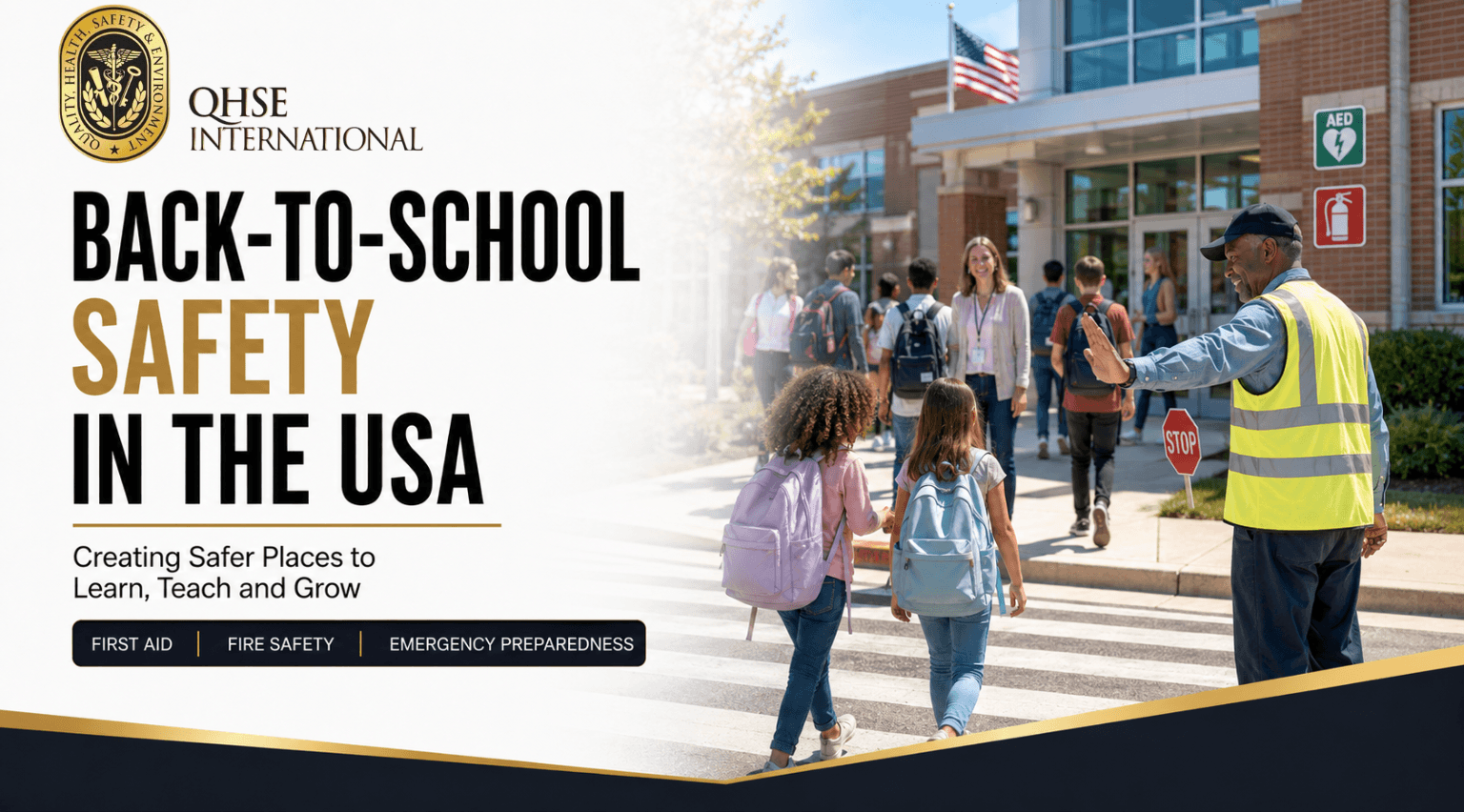
Drivers should follow posted speed limits, avoid phone use, and obey school-bus laws. Students should use designated walkways and follow instructions from crossing guards and transportation personnel.
School vehicles should receive required inspections, and drivers should report defects immediately.
9. Plan for Heat and Outdoor Activities
High temperatures may continue into the school year, particularly in states such as Florida and Texas.
Students and employees participating in sports, physical education, marching band, maintenance, or other outdoor activities may be exposed to heat-related illness.
Schools should:
Warning signs may include headache, nausea, dizziness, weakness, confusion, and unusual behavior. Suspected heat stroke requires immediate emergency medical assistance.
Severe weather, lightning, cold temperatures, and poor air quality should also be considered.
10. Prevent Slips, Trips, and Falls
Wet floors, damaged sidewalks, loose cords, cluttered hallways, and poorly stored backpacks can cause injuries.
Facilities should keep walkways and exits clear, repair damaged surfaces, clean spills promptly, secure cords, and provide suitable storage.
Employees should also use appropriate ladders or step stools when putting up classroom displays. Standing on chairs, desks, or other unstable furniture should not be permitted.
11. Report and Investigate Incidents
Students and employees should know how to report injuries, near misses, property damage, security concerns, and unsafe conditions.
Reports should be reviewed promptly. When an incident occurs, an Incident Investigation should consider more than the actions of one person.
The review should examine:
Corrective actions should be assigned and followed through to completion. Near-miss reports are especially valuable because they can help prevent a future injury.
12. Support Mental Health and Personal Security
A safe school should support both physical and emotional well-being.
Returning students may experience anxiety, bullying, academic pressure, or difficulty adjusting to a new routine. Students and employees should know where to request help and how to report concerning behavior.
Colleges and universities should also communicate information about campus alerts, security escorts, residence-hall procedures, safe transportation, and emergency contacts.
Start the School Year Safely
Back-to-school safety is not limited to one inspection or emergency drill. It requires regular communication, training, reporting, and improvement throughout the academic year.
Applying Workplace Safety USA principles can help educational institutions identify hazards earlier, prepare for emergencies, protect their employees, and create safer places to learn.
Conclusion:
QHSE International USA supports educational facilities with:
Explore our USA consultancy services, review our USA training options, or visit our registration page.
Contact QHSE International USA
Email: [email protected]
Website: qhseinternational.com/usa
Start the academic year with a stronger safety plan. Contact QHSE International USA to discuss a risk assessment, safety audit, emergency-preparedness review, or employee training program for your educational facility.
Disclaimer: This article provides general safety information and does not replace applicable federal, state, local, institutional, fire-code, public-health, or emergency-service requirements.