
Blog Details
Emergencies don't make appointments.
A fire, chemical release, medical emergency, equipment failure, severe weather event or major operational disruption can develop within minutes.
When it happens, the effectiveness of an organization's response depends largely on what was done before the emergency occurred.
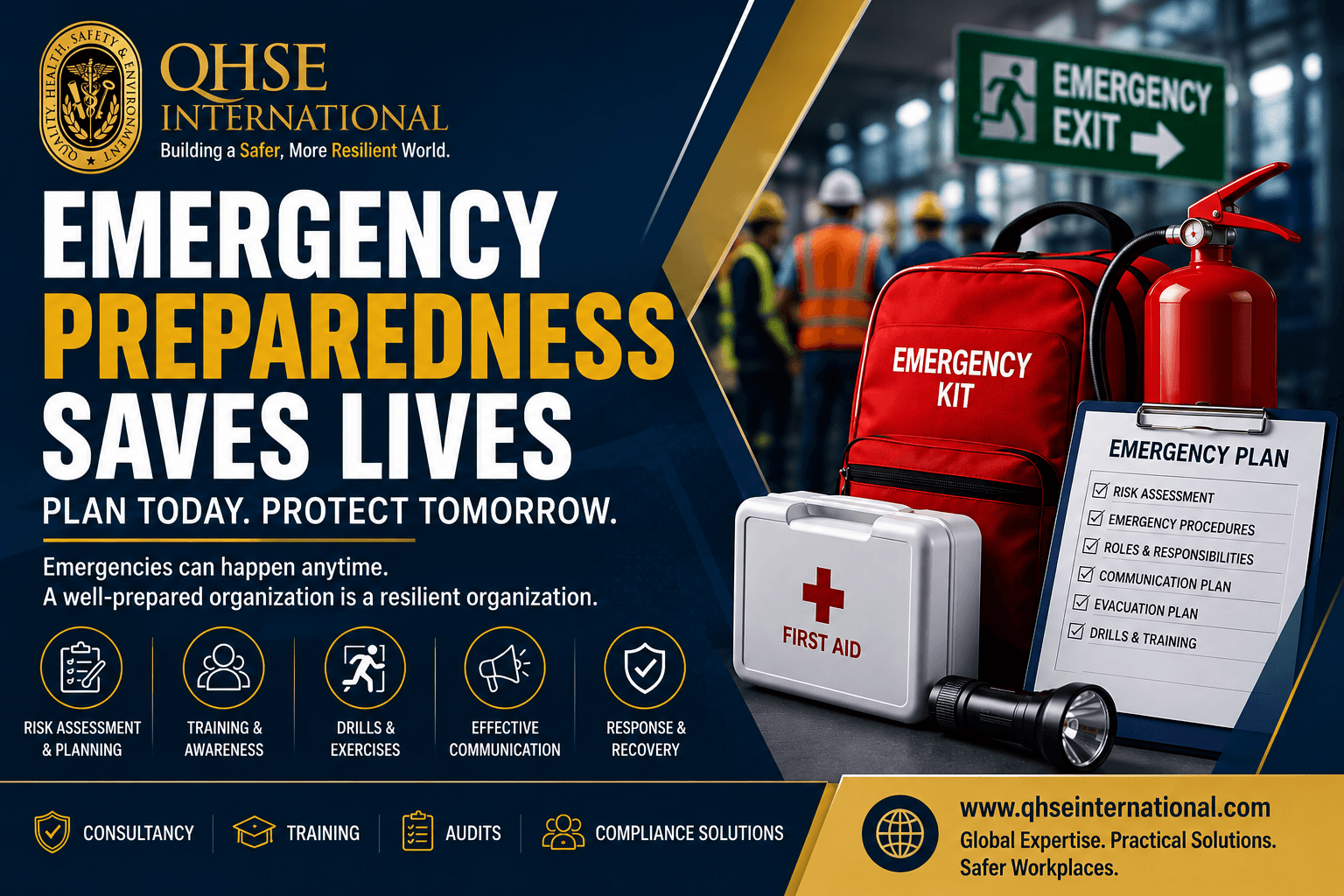
Effective emergency preparedness and response is therefore much more than having an emergency plan stored somewhere on a computer. It requires organizations to understand their risks, establish clear responsibilities, prepare employees, test their arrangements and continually improve.
The question every organization should ask is simple:
If an emergency happened today, would our people know exactly what to do?
Effective workplace emergency preparedness starts with understanding credible emergency scenarios.
Depending on the workplace, these may include:
Organizations should assess which events could seriously affect their people, operations, assets, environment or surrounding community.
This risk assessment becomes the foundation of the emergency response plan.
An emergency response plan should clearly explain what happens from the moment an emergency is identified.
Depending on the organization's risks and applicable requirements, the plan may cover:
A detailed emergency manual provides little protection if employees don't know what to do when the alarm sounds.
Emergencies create pressure. Unclear responsibilities create confusion.
Employees should know who has authority to make decisions and who is responsible for evacuation, communication, first aid, emergency shutdown, headcounts and coordination with external responders.
Depending on the organization, this may include emergency coordinators, fire wardens, first aiders, emergency response teams, security personnel, operations teams and senior management.
Alternates should also be identified so the response does not depend on one person being available.
A written procedure does not automatically create emergency readiness.
Employees need appropriate emergency response training so they understand alarms, evacuation routes, assembly locations, hazards and the actions expected of them.
Personnel with specialist emergency roles may require additional competency in areas such as first aid, firefighting, spill response, rescue or incident command.
Contractors and visitors should also be considered, particularly because they may be unfamiliar with the workplace.
How do you know whether an emergency plan works?
Test it.
Emergency drills and exercises can expose weaknesses before a real emergency does.
After every drill, ask:
The purpose of an emergency drill isn't simply to complete the exercise.
It's to learn from it.
Emergency equipment must be ready when needed.
Depending on workplace risks, this could include fire protection equipment, first-aid supplies, emergency lighting, communication systems, spill-response materials, rescue equipment, emergency PPE and backup power.
Inspection, testing and maintenance should form part of the organization's overall emergency management system.
Communication can quickly become one of the biggest challenges during an emergency.
Organizations should establish how they will communicate with employees, contractors, emergency services, management and other relevant stakeholders.
Alternative arrangements should also be considered if normal communication systems fail.
Clear and timely information can significantly reduce confusion and support better decision-making.
Emergency preparedness shouldn't end once the immediate danger has been controlled.
Organizations should consider how they will stabilize operations, assess damage, communicate with stakeholders and restore critical activities.
This is where emergency management, crisis management and business continuity connect.
Emergency response manages the immediate event.
Crisis management supports strategic decisions and communication.
Business continuity helps maintain or restore critical operations.
Together, they create organizational resilience.
Emergency plans should evolve.
Review them following drills, actual emergencies, operational changes, new equipment, facility modifications or changes in regulatory requirements.
Every exercise, incident and near miss is an opportunity to strengthen preparedness.
Having an emergency plan doesn't necessarily mean you're prepared.
The real test is whether:
Your people know what to do.
Your responsibilities are clear.
Your equipment is ready.
Your procedures have been tested.
If you're uncertain about any of these, it may be time to review your emergency preparedness arrangements.
QHSE International supports organizations in developing practical, risk-based emergency preparedness and response systems.
Our support can include emergency preparedness assessments, emergency response plan development, emergency risk assessments, drills and exercises, Fire & Life Safety assessments, emergency response training, gap assessments, business continuity and crisis management support.
Don't wait for an emergency to discover the gaps in your response arrangements.
Contact QHSE International to strengthen your organization's emergency preparedness and resilience.