
Blog Details
Emergencies rarely begin dramatically.
A strange smell.
A machine suddenly stops.
Smoke appears from an electrical room.
Someone collapses.
An alarm sounds but nobody is sure what it means.
Then the clock starts.
For most organizations, the effectiveness of an emergency response is determined long before emergency services arrive. The first few minutes reveal whether an organization is genuinely prepared—or simply has an emergency plan sitting in a folder.
That is why emergency preparedness and response should be treated as an operational capability, not just a compliance requirement.
During an emergency, people immediately need answers to basic but critical questions:
What happened?
Who is in charge?
Do we evacuate, shelter or isolate the area?
Has the emergency been reported?
Is everyone accounted for?
Does someone require medical assistance?
Could the situation become worse?
When responsibilities, communication and procedures are unclear, valuable time can be lost.
And during an emergency, minutes matter.
Many organizations have an emergency response plan.
The bigger question is whether employees actually understand it.
Workers should know how to:
Emergency coordinators, fire wardens, first aiders and other designated personnel should understand their authority and responsibilities before an incident occurs.
Trying to establish responsibilities during the emergency is already too late.
One of the biggest risks in workplace emergency preparedness is assuming:
“Everyone knows what to do.”
Do they?
A contractor who started yesterday may not.
A visitor may have no idea where the assembly point is.
A newly appointed supervisor may never have participated in a drill.
An employee may know the evacuation route from their normal workstation but not from another part of the facility.
Emergency preparedness must consider the people who will actually be present when something goes wrong—not just permanent employees.
That may sound strange.
But a successful emergency drill should not always be perfect.
Drills should expose weaknesses.
Perhaps the headcount took too long.
Maybe a radio didn't work.
Someone used the wrong exit.
A contractor wasn't accounted for.
A fire door was obstructed.
An emergency coordinator wasn't available.
Those findings are valuable because they were discovered during an exercise rather than during a real emergency.
The important part comes next:
Were those findings corrected?
Emergency drills should form part of a continuous cycle:
Test → Learn → Improve → Test Again
Getting everyone safely out of danger is the immediate priority.
But organizations also need to consider what happens next.
Can critical operations continue?
How will employees and clients be informed?
What happens if the facility cannot reopen?
How will essential systems be restored?
Who manages communication with stakeholders?
This is where emergency response, crisis management and business continuity connect.
Prepared organizations don't only plan to survive the emergency.
They plan to recover from it.
At your next management meeting, ask:
If the room becomes quiet, that tells you something.
Emergency preparedness isn't about predicting exactly when something will happen.
It's about making sure that when the unexpected happens, your people don't have to figure out what to do under pressure.
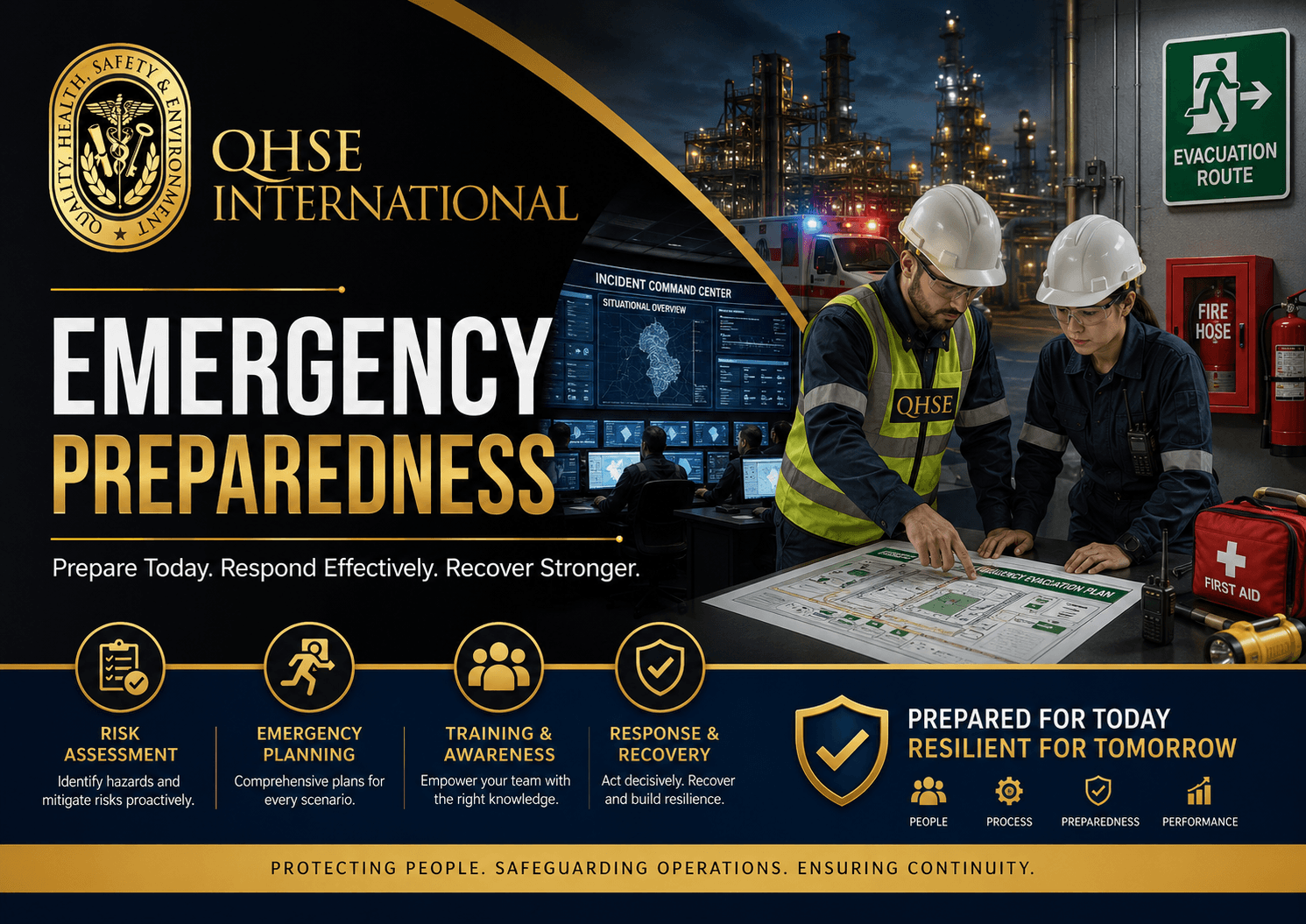
QHSE International supports organizations in strengthening practical emergency preparedness and response, including emergency preparedness assessments, response plan development, risk assessments, emergency drills and exercises, Fire & Life Safety, crisis management, business continuity and emergency response training.
The best time to discover a weakness in your emergency arrangements is before the emergency happens.
Prepare today. Respond effectively. Recover stronger.