
Blog Details
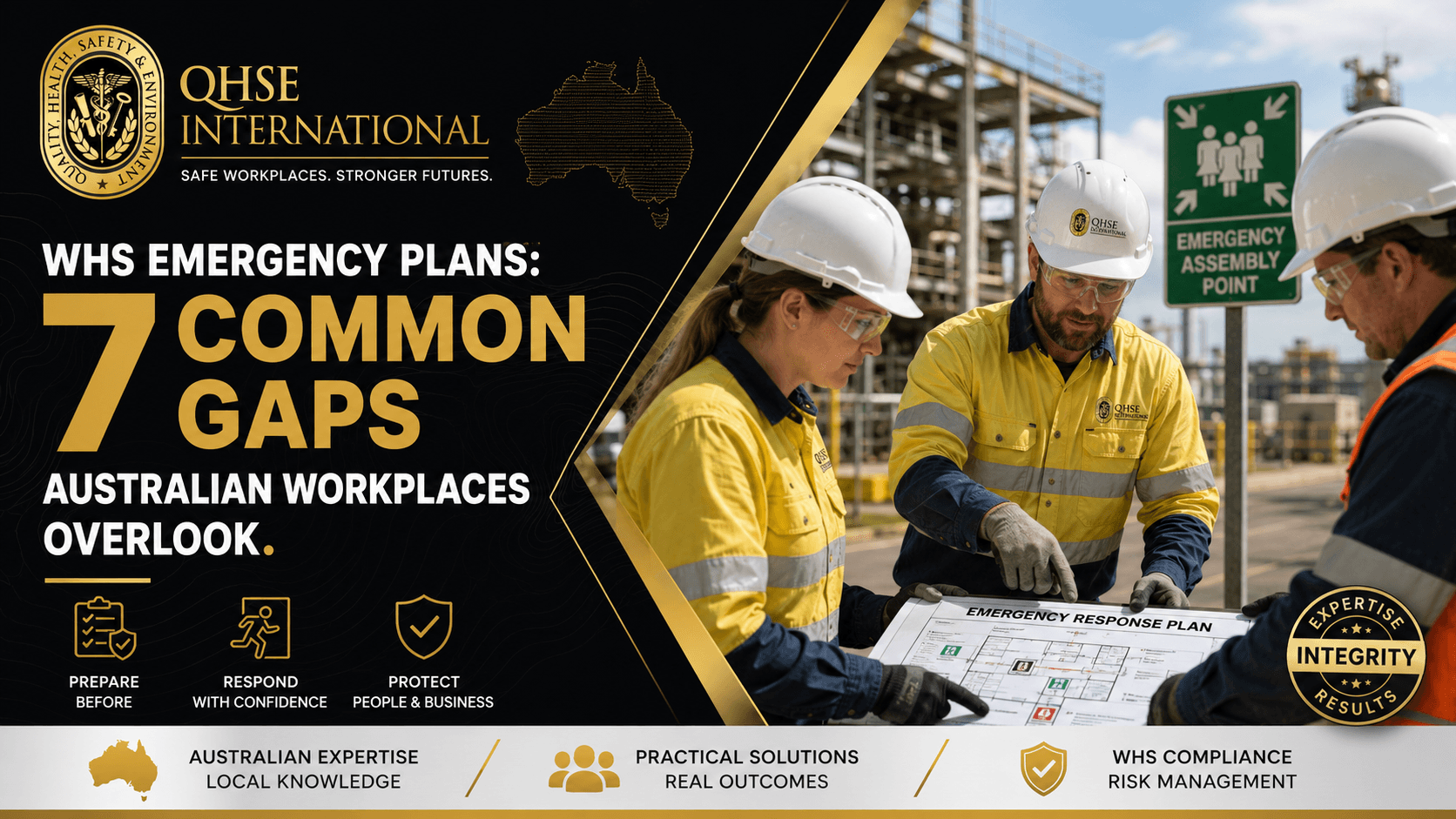
Your workplace has an emergency plan.
There are evacuation diagrams on the walls. Wardens have been appointed. Fire extinguishers are inspected and an evacuation drill takes place periodically.
So you're emergency ready, right?
Not necessarily.
The real test of a WHS emergency plan isn't whether the document exists. It's whether people can use it effectively when something unexpected happens.
In Australian jurisdictions operating under the model WHS framework, emergency planning includes effective emergency response, evacuation, emergency service notification, medical assistance, communication, testing and worker information and training.
Yet practical gaps can still remain.
Here are seven worth checking.
Workplaces change.
New machinery is installed. Processes change. Contractors arrive. Buildings are modified. Hazardous substances are introduced.
But has the emergency response plan changed with them?
An emergency plan should reflect the workplace's current activities, hazards, size, location and workforce not what the business looked like three years ago.
Ask: When was our emergency plan last reviewed against our actual workplace risks?
Appointing wardens or emergency coordinators is only the beginning.
People need to understand:
During an emergency, unclear authority can create delays and conflicting instructions.
Permanent workers may know where the assembly point is.
What about the contractor who arrived two hours ago?
Or the visitor attending a meeting?
A strong workplace emergency plan considers everyone who could be present, including contractors, labour-hire workers, delivery personnel and visitors.
Emergency information should be incorporated into appropriate induction and visitor arrangements.
Emergency preparedness is more than walking to an assembly point.
Workers may also need to understand:
Training should reflect the emergencies that could realistically occur in that workplace.
Everyone knows the evacuation drill happens at 10:00 am.
The alarm sounds.
Everyone walks outside.
A headcount is completed.
Drill complete.
But what exactly was tested?
Effective emergency drills should help identify weaknesses in communication, accountability, leadership, equipment, evacuation and decision-making.
Consider varying scenarios rather than repeatedly testing the same predictable event.
A failed radio.
A blocked exit.
A missing contractor.
Confusion at the assembly point.
These aren't reasons to call a drill unsuccessful.
They're exactly why drills are valuable.
The problem occurs when findings are documented and then forgotten.
Every significant finding should have:
Action → Owner → Deadline → Verification → Closure
Emergency preparedness improves when lessons become actions.
Everyone has reached the assembly point safely.
Now what?
Can operations continue?
Who communicates with clients and employees?
What if the building cannot reopen?
How will critical systems be restored?
Emergency preparedness should connect with crisis management and business continuity so the organization can manage both the immediate event and the recovery that follows.
At your next WHS or management meeting, ask:
If you're not completely confident in the answer, don't wait for an emergency to find out.
QHSE International supports Australian organizations with practical, risk-based workplace emergency preparedness, including:
A plan on paper is only the beginning. Real preparedness is knowing it will work when it matters.
Contact QHSE International Australia to assess, test and strengthen your workplace emergency arrangements.