
Blog Details
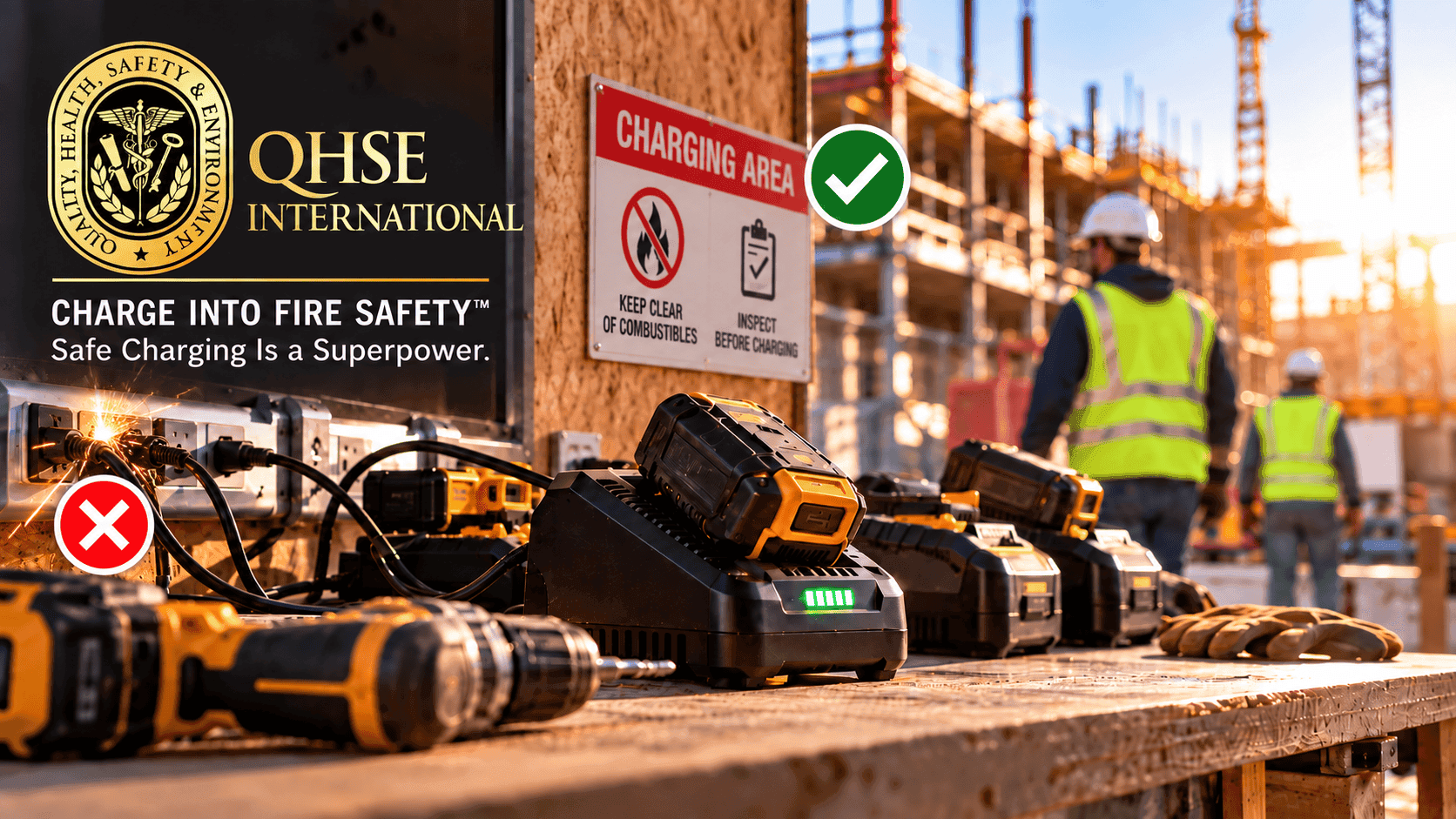
Fire risks on construction sites aren’t always caused by hot work—sometimes, they’re quietly charging on the workbench.
Cordless drills, saws, impact drivers, lighting and other rechargeable equipment are now part of everyday construction work. But because charging batteries has become so routine, the potential fire risk can easily be overlooked.
During NFPA Fire Prevention Week™, October 4–10, 2026, this is especially worth discussing. This year’s theme, “Charge into Fire Safety™: Safe Charging Is a Superpower,” focuses on safer charging practices and lithium-ion battery fire prevention.
For construction companies, it is a good opportunity to ask a simple question:
How safely are batteries being charged on your jobsite?
Lithium-ion batteries store a significant amount of energy in a relatively small package. When a battery becomes damaged, overheated, defective or improperly charged, it can create a serious fire hazard.
Construction environments can increase those risks. Batteries may be dropped or struck during work, exposed to heat, dust or moisture, stored in vehicles or toolboxes, used heavily throughout the day, or charged close to combustible materials.
A battery that appears normal externally may also have suffered internal damage following an impact.
That makes battery inspection and safe charging an important part of workplace safety and risk management with QHSE International USA.
A recent incident involving UK construction contractor Willmott Dixon shows why charging areas deserve attention.
A lithium-ion battery ignited while it was charging on an active construction site. Fortunately, the battery was being charged inside a purpose-designed battery charging unit equipped with fire detection, suppression and containment features.
Those controls helped confine the fire to the charging locker and prevented it from spreading further across the site.
The incident provides an important lesson for construction companies:
Battery charging may feel like a routine activity, but where and how batteries are charged can make a significant difference when something goes wrong.
It also demonstrates why battery charging areas should be considered during site planning, workplace inspections and fire risk assessments—not simply treated as a convenient place to plug in tools.
Use the charger recommended or approved by the battery manufacturer.
Just because another charger fits does not necessarily mean it is appropriate for that battery.
Workers should look for warning signs such as swelling, cracks, excessive heat, leaking, unusual smells, hissing, popping sounds or smoke.
Damaged or questionable batteries should be removed from service rather than placed back on a charger.
Avoid charging batteries near cardboard boxes, rags, wood, insulation, packaging or other combustible materials commonly found on construction sites.
Charging equipment should also never block emergency exits or evacuation routes.
Batteries and chargers should be placed on a hard, stable surface where heat can dissipate.
Avoid placing chargers on soft or combustible surfaces.
Construction tools take a beating.
If a battery has been dropped from height, crushed, struck by equipment or otherwise seriously damaged, it should be inspected before being returned to normal use.
Putting a damaged battery immediately back onto a charger can introduce unnecessary risk.
Once batteries are fully charged, follow the manufacturer’s instructions regarding removal from the charger.
Do not automatically assume leaving batteries connected indefinitely is good practice.
Construction safety inspections often concentrate on obvious hazards such as fall protection, scaffolding, electrical hazards, hot work, machine guarding and housekeeping.
Battery charging should be part of that conversation too.
During a safety audit or workplace inspection, consider asking:
Where are batteries being charged?
Are chargers and batteries in good condition?
Are combustible materials stored nearby?
Are damaged batteries being removed from service?
Do workers know the warning signs of battery failure?
Including these questions in a Job Hazard Analysis, Risk Assessment or routine workplace inspection can help identify problems before they become incidents.
Organizations looking to strengthen these areas can learn more about QHSE International consultancy and risk management services.
One of the most valuable lessons from Fire Prevention Week is that prevention often comes down to simple everyday decisions.
A worker notices a swollen battery and reports it.
A supervisor moves a charging station away from stored cardboard.
A damaged charger gets replaced.
A battery that was dropped from height is taken out of service.
A charging area is added to the weekly safety inspection.
None of these actions seem dramatic.
That’s exactly why they matter.
Good fire prevention means identifying the conditions that could lead to an incident before the emergency begins.
This NFPA Fire Prevention Week, take a few minutes to look around your construction site.
That cordless tool battery sitting on the charger may seem like one of the smallest hazards on the project—but safe charging practices can make a meaningful difference.
QHSE International USA supports organizations with Risk Assessments, Safety Audits, Fire & Life Safety, workplace inspections, OSHA-aligned safety programs and management system development.
Fire Prevention Week lasts one week. Fire prevention should happen every day.